
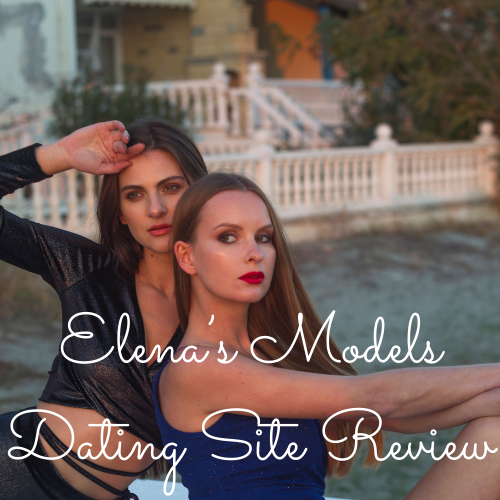
Elena’s Models is a different breed of dating website. This isn’t a website where you can meet locals and get to be in a relationship with them, it’s more about finding Russian and Ukrainian women who live thousands of miles away. I personally used Elena’s Models while I was looking for my husband to be 18 years ago.
In this detailed Elena’s Models review, I am going to provide most known Elena’s Models facts, describe how to join the site, membership plans, pros and cons and my recommendations of how to use Elena’s Models in order to meet your future real love.
Overall Ranking: 4.8/5 
Website: Check site here
Price: join free. Gold, Platinum, and Ultimate paid plans
Language: English and Russian
Support: Elena’s Models customer service
Table of Contents
Benefits
If you’re interested in Slavic women then Elena’s Models is the best possible website for you. You don’t even need to sign up as you can browse through pictures of women on the website without an account. If you wish to do more, however, then you’ll need to sign up.
Overview: How can Elena’s Models Dating Site Help You?
1.Elena’s Models is mostly for men who are interested in Russian and Ukrainian women living in their respective countries. If you’re looking to meet a local American, European or Australian woman and go out with her then you’ll be disappointed because Elena’s Models isn’t that type of dating website.
On the other hand if you prefer finding and falling in love with a Russian lady then it’s unlikely that you’ll find a website better than Elena’s Models for that.
2.The website has about 3 million active users and is available in English and Russian. Naturally, most of the men signed up are American, Australian, English or European who can communicate in English while almost all women are Russian and Ukrainian and other countries like Romania, Kazakhstan, Belarus and Moldova.
3.The website has been around for over 18 years meaning they know how to do online dating right. A lot of people ended up meeting their future spouses through Elena’s Models.


4.Joining Elena’s Models doesn’t mean that you’ve given up on finding love through face to face interactions. It could just be that you’re too busy or tired to meet people in person and get to know them in real life.
Additionally, maybe you’re more interested in Slavic women and find them more appealing. Odds are you won’t find many of them in your neighborhood and Elena’s Models would be the best place to look.
Elena’s Models is a website that can definitely help you find your love and potential marriage. The fact that the website has so many active users means you’ll probably find someone who interests you on it.

About Elena’s Models
1.Elena’s Models is a website that’s been around since 1999. You know what that means? It’s a dating website that has been active and getting people together for over 20 years.
Websites that don’t work or are scams don’t usually last that long. The main premise behind the website is to connect men with Slavic women. A lot of men find Russian and Ukrainian women quite attractive, and Elena’s Models knows that and can help these men find the women they’re looking for.
2.The website can be for casual relationships, but a significant portion of the people who used it ended up finding people to marry. What’s so great is that it brings together people who otherwise would have never met.
3.What are the odds that a man from Mexico or the United States would end up with a girl living in Ukraine or Russia? Pretty low, but Elena’s Models can help them find each other. Just go to the websites home page and you’ll find displays of several couples from different countries who ended up married.
4.You might notice that some review websites give Elena’s Models terrible reviews and call the website a scam. The truth is that these websites are most likely upset because they are most likely Elena’s Models’ competitors. The online dating business is extremely competitive and some aggressive sites use any methods possible to discredit their competitors.
5.As most dating sites Elena’s Models has to deal with professional scammers as well. These are real women who use their luring approaches to get money. They became extremely advanced fooling some men. However, if you are aware of how to recognize and avoid such scammers, you should be able to avoid any troubles of dealing with scammers.
6.Just by going to the website’s home page you’ll find the number of communications performed between users on the website today. The number is usually above 20 thousands meaning that it’s active and running smoothly.
7.There are people of various ages on Elena’s Models so whether you’re 20 or 60 looking for a beautiful Slavic woman to talk to, and potentially marry; you’ll likely find someone within an age group that suits you perfectly.
How to Join Elena’s Models

1.Joining Elena’s Models is so easy that you’ll be amazed. It takes very little time. Just a heads up that you can browse women on the website without being a member or signing up; but if you want to start getting in touch with them, then an account will be necessary. In order to get started with the sign up process just like on “Sign Up Free” which is present on the home page.
2.You’ll need to entire your first and last name, your gender, age, country, city, email, and select a password. You can set up the rest of your profile later if you want to get to browsing women’s profiles immediately. What we particularly enjoy about Elena’s Models is that searching for women on the website is smooth and easy.
3.Of course you can just browse general profiles, or you can sort them by “new” or “popular” members. The website, however, gives you lots of other options. For example you can find a quick search for certain categories like “women online now” if you want to start talking to someone immediately, or things like “women with videos,” “confirmed profiles,” and “new this week.” The women with videos category is for those who have video introductions on their profiles.
4.You can also search for women by country, the following choices are available: Russian, Ukrainian, Moldova, Belarus, Kazakhstan, and Romanian.
You can also choose to see women who work in a certain profession like models, doctors, English teachers, lawyers, and others. If you’re interested in finding Russian women who live in America you can select to see “Russian women in USA.”
5.So there’s really no shortage of ways to look for women. Once you go through a certain category and find someone you find attractive, you can then look at their profile which will feature a personal message, that woman’s interests, and the languages she speaks.
Of course the profile will also have several pictures of her. Additional information you should find on a profile includes: star sign, height, weight, eye color, hair color and length, ethnicity, and whether or not she was married or has children. You can also find out what her religion is and whether she smokes or drinks.
6.In order to increase your odds of women responding to you, you should make sure your profile is complete as possible. You should add information about your weight and height for instance as well as what you do and whether or not you were ever married. Adding a profile picture is of the utmost importance.
Make sure it’s a recent one that represents how you really look right now or else you’ll be deceiving those on the website. They’ll find out eventually when they talk to you via video chat or meet you in person.
7.What’s so great about Elena’s Models is that signing up literally takes seconds. After the sign up process, you have plenty of ways to filter women. You can do it by profession, where they’re originally from, where they are now, and through a few other ways.

Benefits of Elena’s Models Paid Plans

There’s not much you can do without a paid plan. You’ll be able to browse the profiles of women, but not get in touch with them.
Elena’s Models features 3 main plans as well as a few other options for people who don’t want full memberships. The 3 main paid plans are gold, platinum, and ultimate. Gold has the least features and is the cheapest while ultimate is the most expensive and has the most features.
Gold Membership
With a gold membership you can use text chat to talk to up to 50 women. Unfortunately, the gold membership plan doesn’t give you access to video chat. You also get a personal blog with the gold membership and can view the videos of ladies in your contacts. If a woman isn’t in your contacts then you won’t be able to view her video.
You’ll also be placed higher than free members on the website‘s listing. So basically you get to chat with up to 50 women, a personal blog, and see videos of contacts. No video chat available though.
Platinum Membership
Platinum members are placed higher than gold and free members on the website’s listing so they’re placed just behind ultimate members. You also get a personal blog just like a person with a gold membership would, but there’s much more to platinum subscriptions.
A platinum member will be able to download the email addresses and phone numbers of women. Basically, they have access to the website’s database. This can make it very easy to get in touch with women you’re interested in. Platinum members can also text or video chat with any woman on the website without restrictions as opposed to gold members who can’t video chat.
Finally, being a platinum member allows you to view profiles of women without being detected. Women will know when a gold or free member sees their profile, but platinum members can do this in secrecy without being found out.
Ultimate Membership
Ultimate is the highest membership and the one with the most perks. For starters, ultimate members are placed higher than anyone else on the website’s listing. So if you want women to see and find you, then you should go for an ultimate membership.
Apart from being able to do anything platinum and gold members can, ultimate members get profile consultation and editing from Elena’s Models support. So if you need help making your profile more attractive, an ultimate membership is the way to go.
You can also get help from the website by getting customer support to contact and verify 5 women of your choosing. An 8 hour coaching audio is also available to help ultimate members.

Others
There are a few plans that only give you a few features, but that’s all some people are looking for. For example, for $20 a month you can get unlimited mail between you and someone you choose. If you want to video chat with a single person without a limit then that would be $30 paid by each of you.
| Membership | Free | Gold | Platinum | Ultimate |
| Create profile | Yes | Yes | Yes | Yes |
| Check other members profiles | Yes | Yes | Yes | Yes |
| Communicate with other members | No | Yes | Yes | Yes |
| Check who viewed your profile | No | Yes | Yes | Yes |
| Extended personal profile | No | Yes | Yes | Yes |
| Video Chat | No | No | Yes | Yes |
| Browse Profiles without detection | No | No | Yes | Yes |
| Elena’s Models secure check your matches profile | No | No | No | Yes |
| Make calls to Elena’s Models premier team and personalize your matching experience | No | No | No | Yes |
| Price (per month) | 0
| $19 | $58.25 | $99.58 |
Special Features
The special features are those you get with an ultimate membership. These include getting the website’s support to contact and verify the profiles of 5 women of your choice. You also get assistance with editing and optimizing your profile. A platinum account doesn’t give you these features but allows you to view women’s profiles without being detected.
Mobile Apps
Elena’s Models has Android and iOS apps. The apps are great and allow you to browse profiles and get in touch with women. If you’re looking for something on the go then a mobile app would suit you well.
Pros
- Allows you to meet women from abroad.
- Has lots of active users.
- You can browse women according to many different categories and filters.
- Has plenty of membership plans.
- Mobile apps for Android and iOS users.
- Lots of features especially with platinum and ultimate memberships.
- Women’s contact is verified individually by Elena’s Models’ customer service, but contacting them directly by phone.
Cons
- For the most successful results paid membership should be used.
- Not great for meeting local women.
Customer Support
For any assistance or help while using Elena’s Models you can go to www.elenasmodels.com/support and they’ll be more than happy to assist you with anything you need.

Elena’s Models Final Verdict
Elena’s Models is a great website that allows you to meet women abroad. It’s perfect for men who are looking to meet women from countries like Russia, Romania, Ukraine, Belarus, Kazakhstan and Moldova.
Since I used it 18 years ago the site changed tremendously and became very efficient and advanced with with many success stories. Even though I met my future husband on a different dating site, I had a chance to communicate with many very nice men from different countries who had serious intentions.
This was one of the main attractions for me using Elena’s Models that most men who joined the site had serious intentions of a long term relationship and marriages. Their profiles were checked and I could see their previous marriage history if any, children and criminal records.
Elena’s Models check women’s profile and contact information as well. I received a phone call from the Elena’s Models customer service checking my phone number and other details.
You should be aware that there is a chance that you can come across a professional scammers on Elena’s Models despite the best companies efforts to eliminate and block them. In our days scammers use real, in most cases extremely attractive young ladies to lure single men into a relationship.
The search options are particularly impressive as there are lots of ways that you can use to filter out women. Perhaps the platinum membership is the most perfectly balanced one giving you lots of features without being as expensive as the ultimate membership. Overall it’s a great website to meet your potential soul mate who you might ever meet otherwise as they live thousands of miles away.
Overall Ranking: 4.8/5
Have you tried Elena’s Models dating site? If so, let us know what you think! This will definitely help other users who are looking for their partner.
If you have any questions, leave them below and I will make sure to come back to you within next 48 hours.